The Global Traditional Medicine Library Launched
 The World Health Organization (WHO) has launched the Traditional Medicine Global Library, the first global initiative dedicated to organizing, qualifying, and expanding access to scientific and technical evidence on Traditional, Complementary, and Integrative Medicines (TCIM). The platform is available in open access and can be consulted at https://tmgl.org/.
Its development responds to a historic public health challenge: the fragmentation and dispersion of knowledge on Traditional Medicine, often distributed across multiple sources, languages, and formats, which can hinder its use by professionals, managers, researchers, and citizens. “By bringing this content together in a single, structured environment, the Library seeks to support informed decisions and promote greater equity in access to health information,” stated João Paulo Souza, director of BIREME.
The Library was developed as part of the WHO’s global strategy for Traditional, Complementary, and Integrative Medicine (TCIM), with institutional coordination provided by WHO through its Global Center for Traditional Medicine, and technical development led by BIREME – the PAHO/WHO Latin American and Caribbean Center on Health Sciences Information, an international leader in health knowledge management.
This is the result of technical cooperation that makes the tool available as an important milestone for recently agreed international commitments in Traditional, Complementary, and Integrative Medicines, including the Gujarat Declaration (2023) and the Delhi Declaration (2025), which highlight the need to strengthen the evidence base, regulation, and safe articulation of these practices in health systems. The Library is also part of the WHO Global Strategy on Traditional Medicine 2025–2034, which prioritizes expanding access to reliable information and promoting the responsible use of TCIM for the benefit of public health.
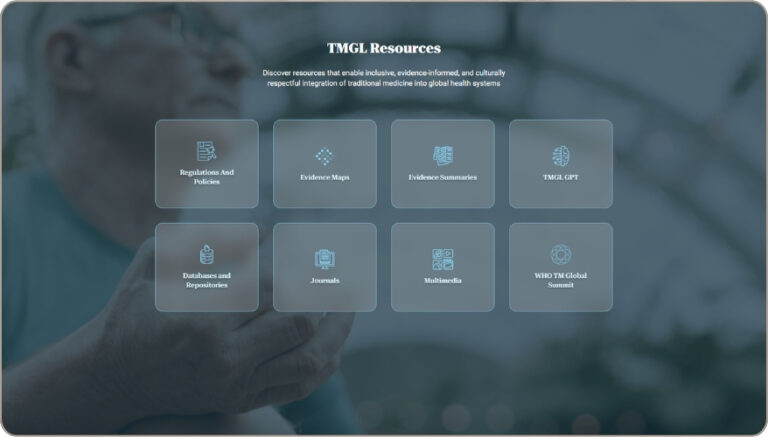
The platform brings together different types of resources, such as technical documents, scientific publications, policies, guidelines, and databases from recognized institutional sources. The content is selected and organized based on technical and methodological criteria that ensure quality, traceability, and context.
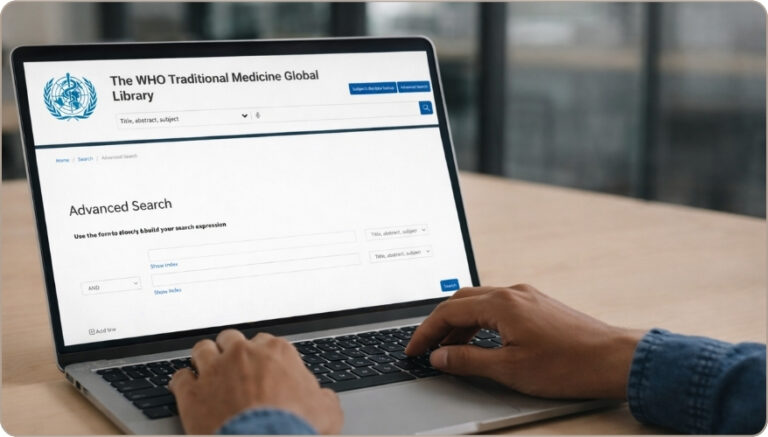
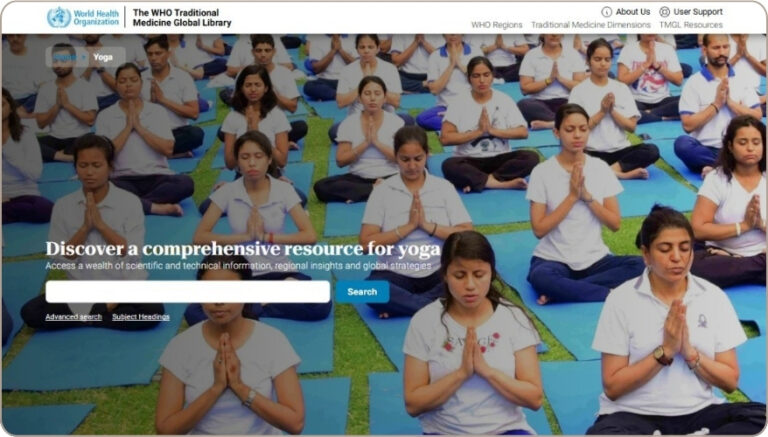
Navigation is structured by themes, resource types, and standardized metadata, which allows users to locate information in a targeted and contextualized manner, going beyond a simple keyword search.
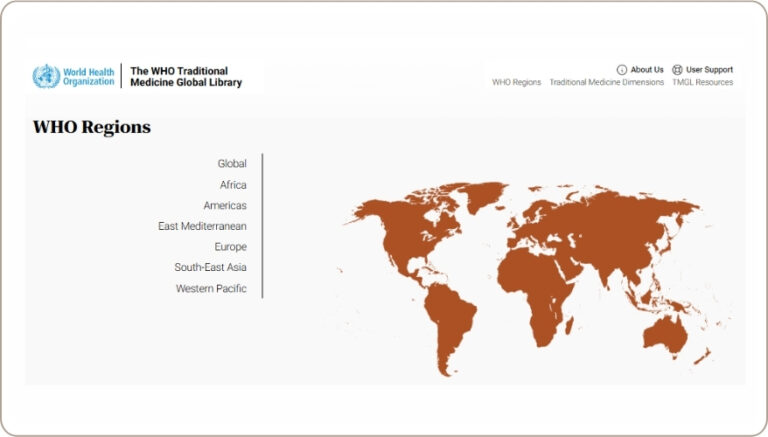
The potential impact of the Traditional Medicine Global Library extends to a wide audience. Health professionals can access evidence to support safe and integrated practices; managers and policymakers find support for planning and regulation; researchers and librarians have an organized basis for studies and evidence syntheses; and citizens have access to reliable information on traditional and complementary practices. By reducing barriers such as scattered sources, access limitations, and information inequalities, it contributes to reducing inequalities between countries and regions, in addition to strengthening public health decision-making.
Before the Traditional Medicine Global Library, knowledge about TCIM was largely fragmented across isolated repositories that were difficult to access. With the creation of the platform, the WHO now offers a global reference point that strengthens the visibility, quality, and responsible use of evidence on traditional medicines in the contemporary public health context. At the same time, there is a strong focus on supporting the mission of providing “health for all,” considering the communities’ cultural specificities.
Currently, and since its launch, the Traditional Medicine Global Library is available in English, in open access to the public. The platform can now be explored and used by institutions, professionals, practitioners, and people interested in understanding and contextualizing the role of traditional medicines in health systems. Continuous developments are planned, including the expansion of the collection, new institutional partnerships, the incorporation of other languages, and the improvement of functionalities.
Frequently Asked Questions (FAQ)
- What is the WHO Traditional Medicine Global Library?
The Traditional Medicine Global Library is a World Health Organization initiative dedicated to gathering, organizing, and qualifying scientific and technical evidence on Traditional, Complementary, and Integrative Medicine (TCIM) in open access. Launched in December 2025 during the Second WHO Global Summit on Traditional Medicine in India, the online portal already contains more than 1.8 million technical and scientific documents, with publications from 125 databases and repositories.
- What problem does the WHO Traditional Medicine Global Library solve?
By making this global resource available online, the WHO seeks to overcome the challenge of fragmentation and dispersion of knowledge about traditional medicines, which historically hinders access, comparison of evidence, and application of this knowledge in health decision-making, both in clinical practice and in public policy.
- How was the WHO Traditional Medicine Global Library developed?
The Library was developed within the framework of the WHO Global Traditional Medicine Strategy 2025–2034, which sets international priorities for strengthening the evidence base, regulation, innovation, and safe integration of TCIM into health systems. The initiative is a strategic tool for implementing the commitments agreed upon in the Gujarat Declaration (2023) and the Delhi Declaration (2025), adopted in the context of the WHO Global Traditional Medicine Summits.
Institutional coordination is provided by the WHO Global Center for Traditional Medicine, with technical development led by BIREME/PAHO/WHO, PAHO’s specialized Center for health information and knowledge management. Learn more about networking in the article The WHO Global Traditional Medicine Library Network.
- What kind of content is available on the platform?
The Library brings together scientific and technical databases, regulatory documents, legislation, public policies, guidelines, evidence maps, scientific journals, repository directories, multimedia collections, and editorial sections with news and events. All content is organized using standardized methodology and structured metadata, ensuring quality, traceability, and context.
The platform also includes innovative features such as the Recent Literature Reviews section, evidence maps, analytical dashboards, and TMGL GPT, a generative artificial intelligence tool that supports the search and synthesis of scientific information on TCIM. Learn more in the article A Guided Tour: Facilitating Access.
- Who can benefit from the library?
The Traditional Medicine Global Library benefits health professionals, managers and public policy makers, researchers, librarians, journalists, and academic institutions, as well as citizens interested in reliable information on Traditional, Complementary, and Integrative Medicine. By bringing together qualified evidence in open access, the platform supports both clinical practice and health management and communication.
- In what situations can the library support health decisions?
The Library can support evidence-based clinical decisions, the formulation and regulation of public policies, health service planning, the development of technical guidelines, scientific research, and responsible journalism. It also contributes to expanding and facilitating public access to contextualized and reliable information on TCIM.
- What makes the library reliable?
The reliability of the Traditional Medicine Global Library is based on transparent methodological criteria for the inclusion and organization of information, grounded in principles of public health and information science. The selection considers thematic relevance defined by controlled vocabulary (DeCS), origin from identifiable and traceable sources, indexing in recognized databases—such as LILACS—and compliance with applicable ethical and legal standards.
The platform does not constitute a mechanism for endorsement or clinical validation. The role of WHO and BIREME is to ensure the origin of sources, the quality of metadata, terminological standardization, and the structured organization of knowledge. Formal WHO recommendation processes and guidelines follow their own independent methodologies for critical evaluation of evidence.
- What distinguishes the library from a common website or search engine?
The Traditional Medicine Global Library combines keyword search and structured navigation on a digital platform developed by BIREME and consolidated in the PAHO Virtual Health Libraries ecosystem. The content is organized with qualified metadata, standardized terminology, and thematic categorization, allowing for the contextualized connection of evidence, policies, guidelines, and statistical data. The platform also includes analytical dashboards, integration with other institutional systems, and artificial intelligence resources, such as Super Summaries and TMGL GPT, which support the synthesis and understanding of scientific information. Learn more in the article Agile Technology and Information Security.
- How can I access the platform?
The Traditional Medicine Global Library nis available in open access at https://tmgl.org/.
- What is available at launch and what are the next steps?
Since its launch, the platform has been available in English, with immediate access to already cataloged content. Expansions of the collection, new languages, institutional partnerships, and continuous improvements to the platform are planned. To stay up to date on future developments and news of interest, subscribe to the Library’s newsletter by registering your email address using the button available in the footer of the Home – The WHO Traditional Medicine Global Library.