BIREME and the Ministry of Health: results of information and knowledge management
In early February 2027, the 5th Amendment to the 93rd Technical Cooperation Agreement (TA5/TC93)—established between PAHO/WHO and the Brazilian Ministry of Health to enhance the Latin American and Caribbean Center on Health Sciences Information (BIREME) and maintain the information products and services it provides to countries in the Region—reaches its ten-year mark. Its objectives include promoting equitable access to information, strengthening the capacity of health systems—particularly Brazil’s Unified Health System (SUS)—and utilizing high-quality evidence to formulate public policies, guide care practices, and manage services.
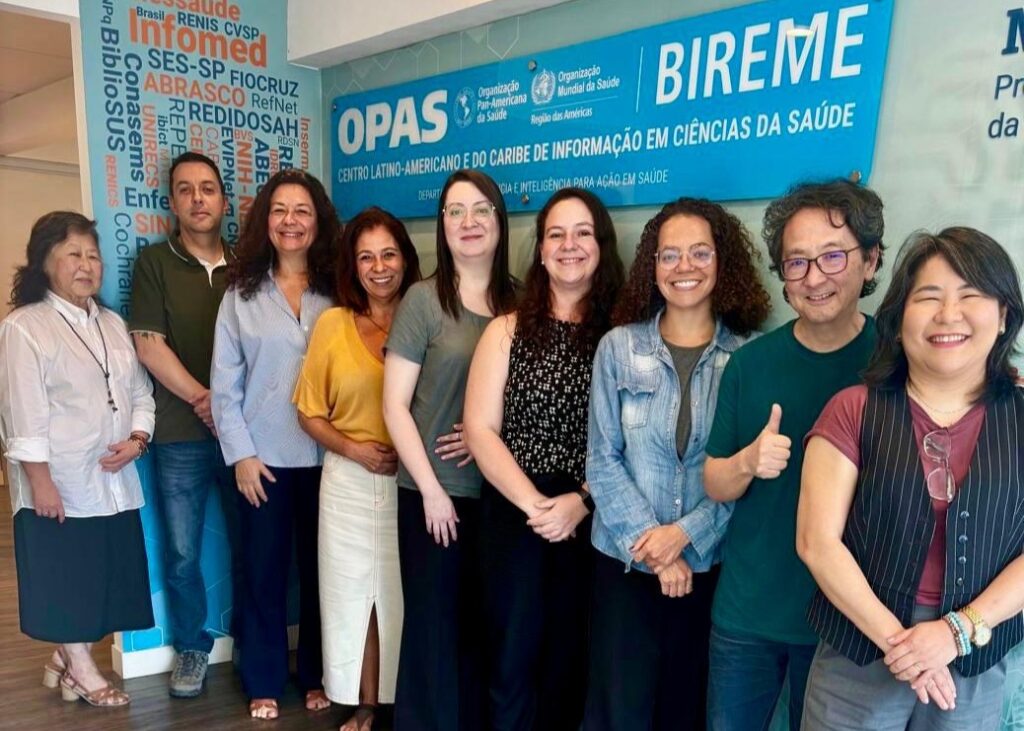
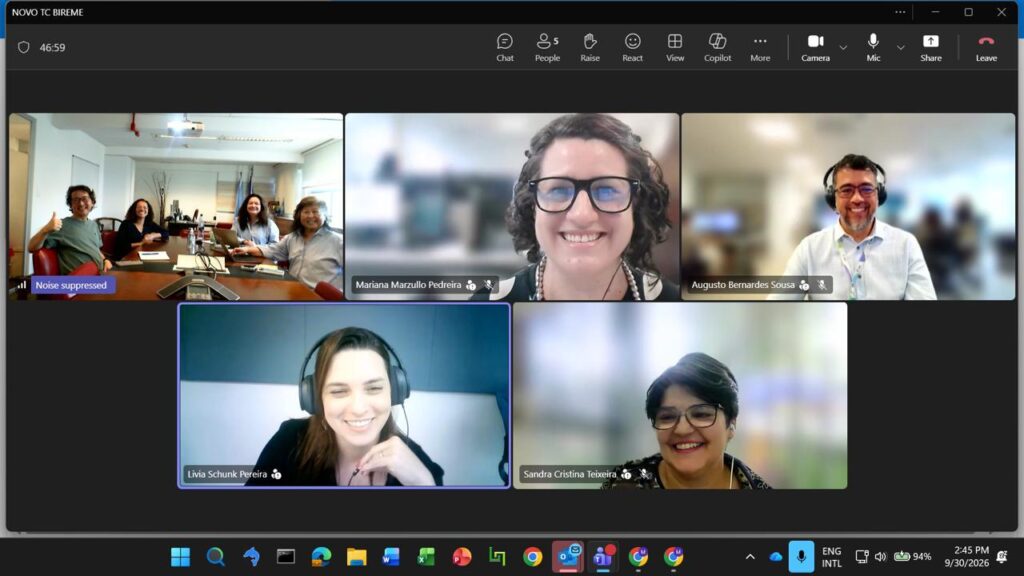
In a hybrid meeting held on September 29, 2026, BIREME and the Ministry of Health acknowledged the results achieved during the first half of 2026 regarding the four Expected Results of TA5/TC93, highlighting the following:
LILACS as a strategic regional infrastructure. Significant progress was made in modernizing scientific information management by combining automation, AI, metadata enrichment, translation, indexing, and editorial quality enhancement. During the semester, LILACS added 22,371 new records and updated 67,659 existing ones, with the participation of 285 cooperating centers across 21 countries. The ecosystem of databases utilizing the LILACS Methodology expanded to 69 databases, incorporating 31,855 new records and involving 236 cooperating centers.
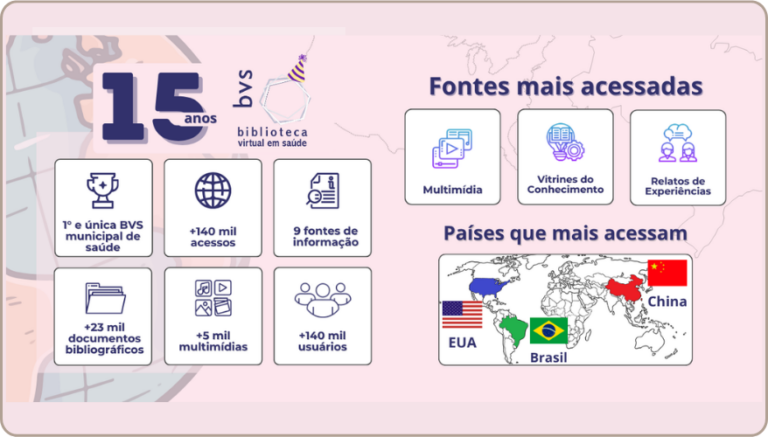
Increased visibility via the VHL (Virtual Health Library). The semester saw progress in expanding the sources, collections, and services made available through the VHL. The Preprint Repository moved from the conceptual phase to implementation, with the OPS (Open Preprint System) platform installed and configured in three languages. Regarding the integration of new information types, the SUS Digital Platform’s legislation pilot made 31 records available, demonstrating the technical feasibility of integration even with minimal metadata. The “Experience Reports” collection reached 343 records organized into five collections, with two new collections added during the period—one related to the digital transformation of the SUS and the other to the PET-Saúde Information and Digital Health projects. This expansion reinforces the VHL (Virtual Health Library) as the primary integrated access point for health knowledge in the region.
VHL sustainability and technological innovation. The focus was on developing technologies to make database processing more efficient, secure, sustainable, and scalable, particularly regarding the identification and handling of duplicate records. The DEDUP/DedupIA process is being progressively integrated into the FI-Admin ecosystem, incorporating new rules, algorithms, and AI application prospects for disambiguation.
Strengthening systems and democratizing access. Regional capacity was strengthened through webinars, professional development, the dissemination of innovations, and the expansion of Knowledge Showcases. Five webinars were held, attracting 1,481 registrations and covering strategic topics such as DeCS, artificial intelligence, the VHL, cooperation networks, and new products and services. Concurrently, the Showcases platform was expanded and updated, reaching a total of 67 published showcases and launching new initiatives on priority health topics.
Additionally, preliminary results from the Health Observatory were shared; this is a new priority requested by the Ministry that will be part of the Cooperation Agreement set to replace TC93.
Observatory. It advanced from the conceptualization phase to the implementation of its first version, integrating platform development, the organization of and access to information sources, and the production of evidence-based content and analyses. The portal must be launched with structured thematic content and analytical products capable of supporting health decision-making, rather than serving merely as a technological infrastructure.
Regarding the meeting. This activity consists of a meeting held once per semester between BIREME/PAHO/WHO and national counterparts from the Ministry of Health—specifically technical focal points from the Department of Technical Cooperation, Innovation, and Development in Health (DECOOP) and the General Coordination of Documentation and Information (CGDI) of the Ministry’s Executive Secretariat—to share achieved results. It characterizes project management and the development of products and services at BIREME, highlighting value-driven deliverables recognized by counterparts and supporting capacity building.