WHO Global Library introduces a new knowledge architecture for traditional medicine
 In 2015, the international community endorsed the Sustainable Development Goals, reaffirming the centrality of health to equitable and sustainable development. Universal health coverage (UHC) emerged as a shared global commitment, grounded in the principle that all people should have access to quality health services without financial hardship. Despite measurable progress over the past two decades, significant gaps persist in service coverage, quality and equity across countries and regions. Strengthening health systems therefore requires not only expanding access to services, but also ensuring access to reliable knowledge capable of informing policy, practice and innovation.
Traditional, complementary and integrative medicine plays a meaningful role in this broader landscape. In many countries, these practices are embedded in community life, cultural identity and primary care pathways. Across WHO Member States, traditional medicine remains widely used—sometimes as a primary source of care, often as a complement to conventional biomedical services. Its continued relevance underscores the importance of ensuring that policies, regulatory frameworks and integration efforts are supported by transparent, organized and accessible evidence.
The intersection between traditional knowledge, biodiversity and scientific discovery further reinforces this imperative. A substantial proportion of modern pharmaceuticals originate from natural sources, and historically, the systematic study of traditional therapeutic practices has contributed to major medical advances. These experiences demonstrate that constructive dialogue between knowledge systems—when conducted ethically and rigorously—can generate innovation while respecting cultural contexts and intellectual heritage.
As health information ecosystems become increasingly digital, the organization and equitable dissemination of knowledge have emerged as strategic priorities. Digital libraries are no longer passive repositories; they function as infrastructures that shape visibility, access and collaboration. Within this landscape, initiatives such as the Virtual Health Library on Traditional, Complementary and Integrative Medicine (VHL TCIM Americas) have demonstrated the value of cooperative governance, standardized methodologies and regional networks in structuring complex and culturally diverse bodies of knowledge. At the same time, experiences such as India’s Traditional Knowledge Digital Library illustrate how documentation can serve as a safeguard against misappropriation by establishing transparent records of prior art.
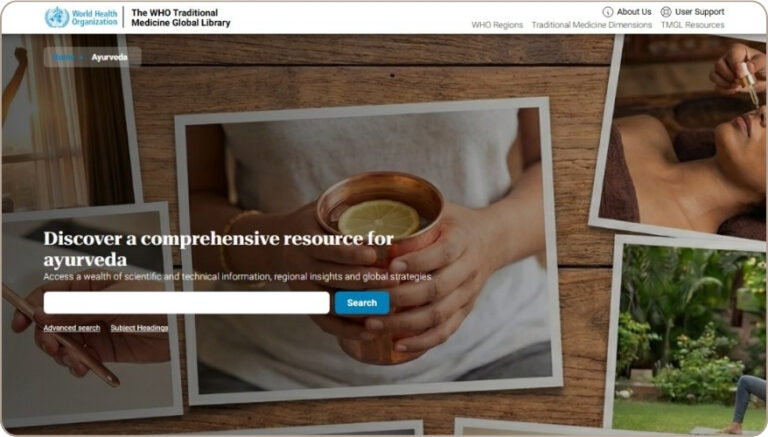
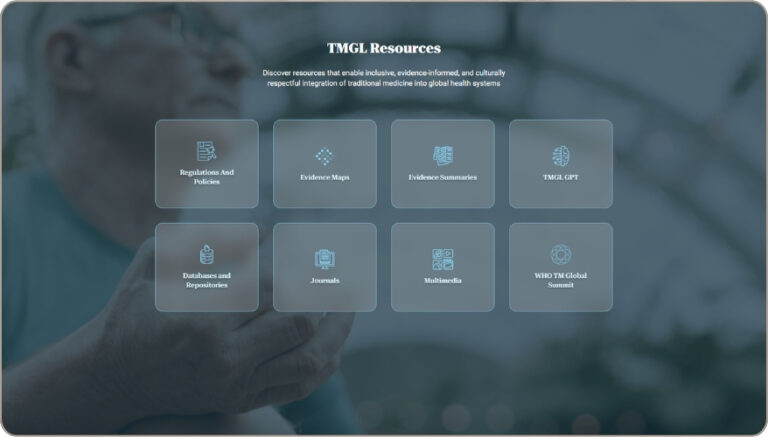
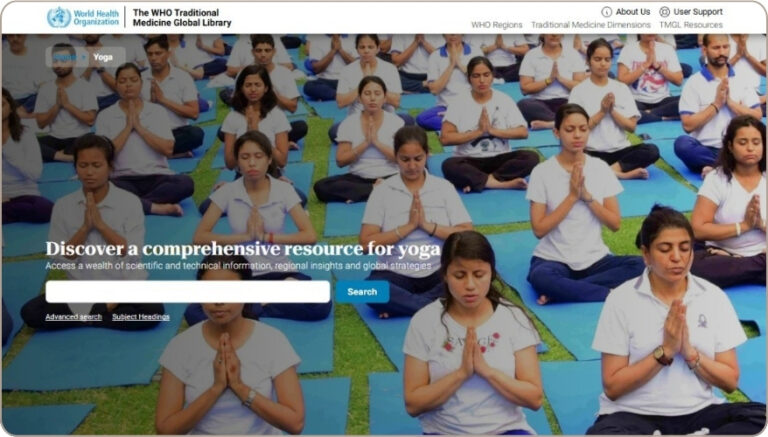
Building upon these lessons and responding to requests from Member States, the World Health Organization embarked on the development of the Traditional Medicine Global Library: a comprehensive, open-access digital platform designed to consolidate scientific evidence and documented traditional medical knowledge within a unified global architecture. Developed in collaboration with the WHO Global Traditional Medicine Centre, with technical leadership from BIREME, the Library represents an important step toward reducing fragmentation, enhancing interoperability and promoting knowledge equity in the field of traditional medicine. The Library was released for public use in December 2025, with its official launch marked by the Director-General of WHO, Dr Tedros Adhanom Ghebreyesus, and the Prime Minister of India, Shri Narendra Modi, and was subsequently referenced in the Delhi Declaration issued during the Second WHO Global Summit on Traditional Medicine.
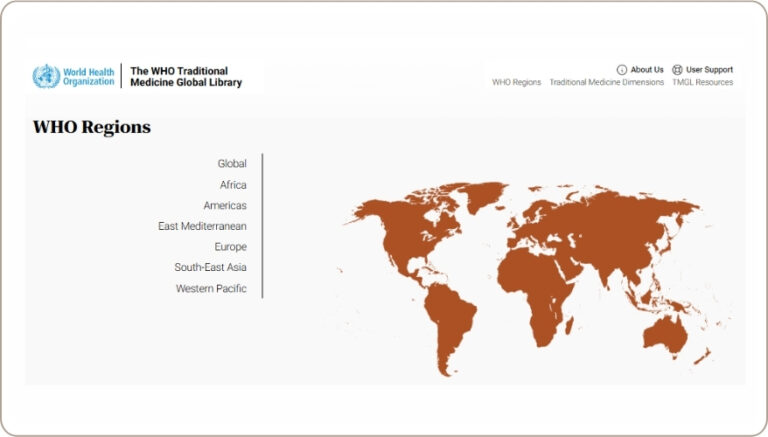
Conceived as a federated and scalable digital public good, the Library integrates global, regional, national and thematic dimensions within a single framework. Its architecture supports evidence-informed policymaking, research, education and responsible practice, while respecting ethical safeguards, intellectual property considerations and cultural diversity. In doing so, the Library not only strengthens access to information but also reinforces the role of Member States, institutions and expert networks in co-creating and sustaining a shared global knowledge space.
This special issue of the BIREME Bulletin examines the development of the WHO Traditional Medicine Global Library from multiple perspectives. The commentaries that follow address its strategic positioning within global health agendas; its federated information architecture and digital innovation model; the technological and security foundations that sustain the platform; the collaborative governance network underpinning its growth; and the regional experience of the VHL TCIM Americas as an important precursor and inspiration. Together, these contributions illustrate how cooperative information systems can support more inclusive, culturally responsive and evidence-informed health systems worldwide.
Editorial by João Paulo Souza, Director of BIREME.