A Guided Tour: Facilitating Access

Introducing the WHO Traditional Medicine Global Library
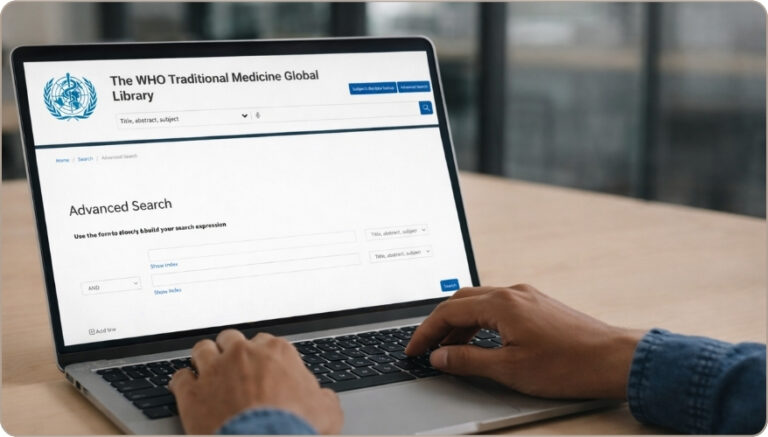
The World Health Organization (WHO) Traditional Medicine Global Library is a collaborative digital library that provides comprehensive access to information on traditional medicine for researchers, professionals, practitioners, policymakers, and the general public.
The platform is currently in its full version (v. 1.0) and is continuously evolving to better meet the needs of the global community. The digital library is built on the belief that traditional medicine plays a fundamental role in global health and well-being, contributing to the articulation of holistic and culturally relevant health systems. Through innovative digital tools, it seeks to promote the collaborative exchange of knowledge, facilitate evidence-based decision-making, and bring traditional medicine closer to conventional medicine.
The Library operates as a multilevel digital platform that integrates interconnected web portals: one global portal, six regional portals, 194 country pages, and eight thematic instances.
Regional Portals
The regional portals within the Library contextualize Traditional Medicine according to priorities, policies, and dynamics in accordance with WHO Regions. It connects thematic dimensions and organizes knowledge according to the eight Dimensions of Traditional Medicine (TM Dimensions), which structure the following content collections in the Library:
- Health & Well-being
- Leadership & Policies
- Research & Evidence
- Health Systems & Services
- Digital Health Frontiers
- Biodiversity & Sustainability
- Rights, Equity & Ethics
- TM for Daily Life
The portals offer information resources relevant to the regional context.
Country Pages
Provide an overview of WHO Member States in Traditional Medicine, combining institutional context and scientific evidence. Includes expert-validated descriptions, national scientific production indicators, and resources. Allows users to view Traditional Medicine systems, scientific production, and country-specific initiatives.
Thematic Pages
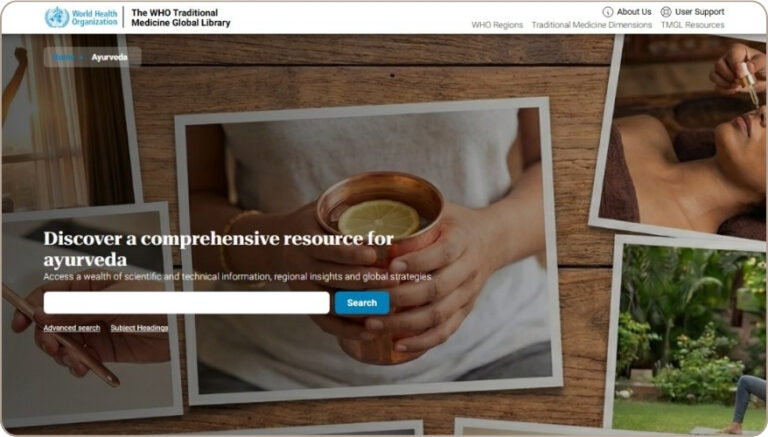
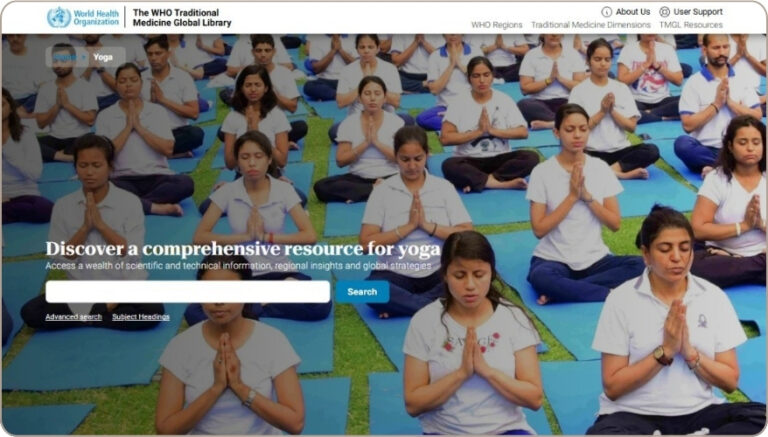
The thematic instances serve as structural axes for thematic navigation and specialized information retrieval. These sections gather and organize qualified information on Traditional, Complementary, and Integrative Medicine (TCIM) systems and topics, offering integrated access to scientific evidence, institutional resources, educational content, and regulatory frameworks. The content is selected based on thematic relevance, source credibility, and validation by technical partners.
The pages promote continuous updating, diversity of formats, and a culturally sensitive and global approach, covering systems such as Ayurveda, Yoga, Naturopathy, Unani, Siddha, Sowa Rigpa, and Homeopathy in India, as well as traditional midwifery in the Americas, reflecting the diversity of traditional practices and knowledge in different cultural contexts.
The Library’s Collection of Information Sources
The Library has a wide collection of information sources in the field of TCIM, such as databases of scientific and technical documents, legislation, multimedia catalogs, scientific journals and websites, evidence maps, events, news, and tools.
At the beginning of 2026, when this text was published, the Library had more than 1.8 million scientific and technical documents. With regard to intellectual property protection, it exclusively consolidates published and open-access information related to traditional knowledge that is already in the public domain, respecting legal, ethical, and cultural frameworks.
It has a Recent Literature Reviews section, a resource dedicated to the dissemination of recent reviews of scientific literature on TCIM, which is automatically updated. These resources strengthen the circulation of knowledge, promote exchange between regions, and support evidence-based decision-making.
With a focus on equitable access to information, the Library has established a partnership with Research4Life, offering free or low-cost access to scientific and technical information for eligible institutions in low- and middle-income countries, as well as regular subscriptions for high-income countries, significantly expanding global reach and access to knowledge about traditional medicine, especially in these contexts. Thus, the Library is now part of Hinari, one of the world’s largest collections of biomedical and health literature, hosted on the Research4Life platform.
Beyond the content of bibliographic databases, the Library includes:
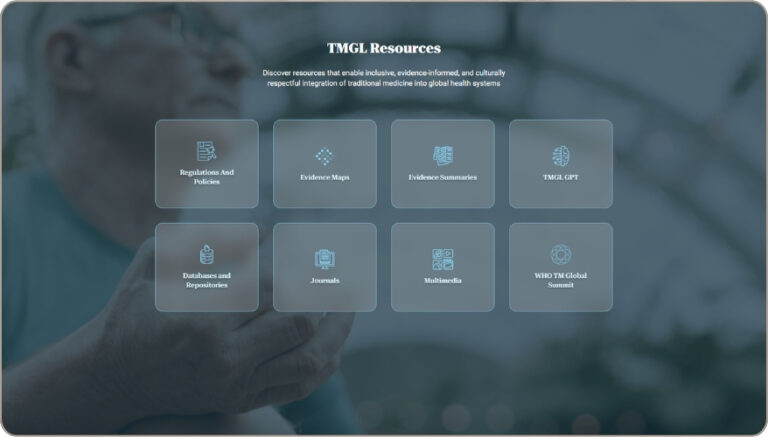
- A catalog with description and information on 178 scientific journals;
- Collection of 18 evidence maps, which help facilitate access to available evidence and support the identification of gaps in knowledge in TCIM;
- A directory of 125 databases and digital repositories, expanding access to specialized sources of scientific information;
- A multimedia collection with 407 resources, including videos, audiovisual materials, and other educational content; and
- A database with 218 documents on policies and regulations, focusing on the Americas, offering relevant support for managers, policymakers and health professionals.
In addition, the Library incorporates “TMGL GPT,” a generative artificial intelligence tool that supports the search, synthesis, and understanding of scientific information on TCIM, strengthening the use of evidence in decision-making.
The Library also houses special collections of high strategic value, including the Exhibition Hall collection from the first edition of the WHO Traditional Medicine Global Summit, bringing together institutional, scientific, and innovative materials presented during the meeting.
In 2026, the Library will become a hub for this event and will provide, in a structured manner, technical briefs from the plenary and parallel sessions, in addition to materials from Expo Discovery, progressively expanding the thematic and documentary collection related to the WHO’s major global forums on traditional medicine.
The Library also acts as a dynamic editorial platform, keeping the scientific and technical community and decision-makers in TCIM continuously informed through dedicated editorial sections, available on all library portals, with global, regional, national, and thematic scope. Among these sections, the following stand out:
- News – with relevant institutional news and updates;
- Events – promoting global, regional, and national events related to traditional medicine; and
- Featured Stories – with curated content and thematic narratives that contextualize evidence, policies, and practices.
Whether to explore traditional medicine for personal interest, research, or policy development, the WHO Traditional Medicine Global Library serves as a gateway to understanding the intersection of health, culture, and community—a journey toward a more integrated and holistic approach to global health.