Digital innovation, Equity, and Intelligence Applied to Knowledge
The article provides an in-depth analysis of the information architecture, functionalities, and digital innovation axes of the World Health Organization (WHO) Traditional Medicine Global Library, with an emphasis on promoting information equity, the global organization of knowledge on Traditional, Complementary, and Integrative Medicine (TCIM), and the responsible use of artificial intelligence to support research, public policy formulation, and the strengthening of health systems.
Innovation in the Organization of Knowledge on TCIM on a Global Scale
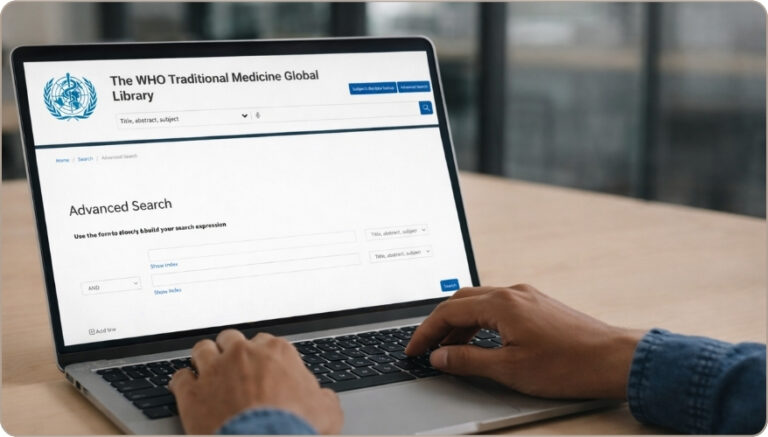
The WHO Traditional Medicine Global Library is a collaborative digital platform designed to gather, organize, and make available scientific, technical, clinical, and ancestral knowledge on TCIMI on a global scale. More than a repository, it is a strategic information infrastructure that supports more equitable, integrated, and culturally sensitive health systems, in line with the WHO Global Strategy on Traditional Medicine 2025-2034.
In this sense, it is not limited to being a technological evolution of the Virtual Health Library (VHL) model but represents an innovation in the way this knowledge is organized, contextualized, and presented on a global scale, capable of articulating coherence, regional diversity, and national specificity, responding to the epistemological and cultural complexity of the field of TCIM.
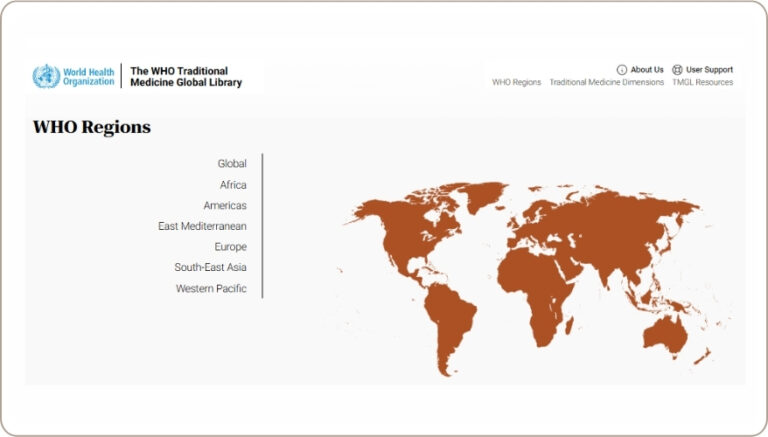
Its design adopts a federated architecture, conceived as a structuring model, guided by equity, plurality of knowledge, and responsible innovation. The innovation lies in the adoption of a common and extensible taxonomy that spans the entire Library, allowing different types of content, collections, and information sources to be integrated into the same semantic structure.
This approach transforms categories, filters, and menus into tools for organizing knowledge, rather than just navigation resources, favoring content reuse, interoperability between collections, and the generation of advanced analyses. This approach allows different levels of information to be articulated in a single environment, respecting regional and national contexts, while strengthening the global vision of the output and use of knowledge on TCIM.
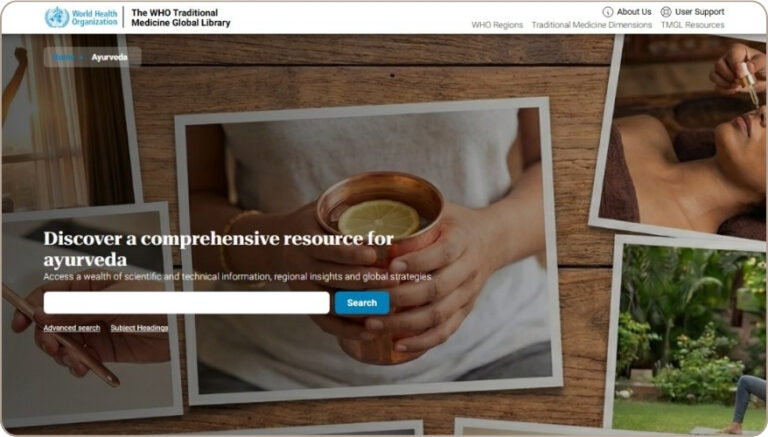
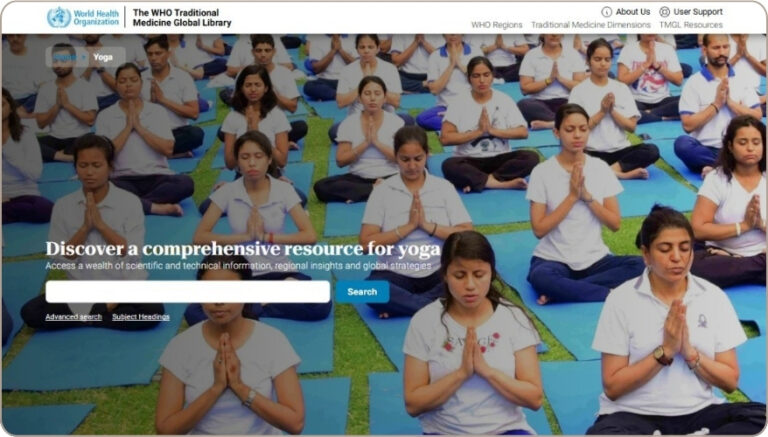
Another noteworthy aspect is the centrality of the user experience as an expression of information architecture. Navigation through expandable menus, thematic exploration guided by semantic filters, and the fluid integration of search results into the portal environment allow users to quickly understand the organizational logic of the online portal, maintaining a sense of continuity and belonging to the Library, regardless of the point of entry.
Its architecture was designed as a sustainable and evolutionary model, prepared to incorporate new collections, thematic dimensions, languages, and analytical services without compromising the consistency of the whole. This ability to grow organically, maintaining common standards and respecting local contexts, positions it not only as a digital library, but as an innovative reference in information architecture for global health knowledge systems.
From a functional and informational standpoint, the Library integrates databases with different types of content into a structured, open-access digital environment, bringing together scientific evidence, technical and regulatory documents, academic publications, multimedia content, and knowledge about traditional practices and wisdom. This integration promotes a balanced dialogue between science, culture, and ancestral practices, expanding qualified access to knowledge and supporting researchers, policymakers, health professionals, academic institutions, and the general public.

In the technological and analytical sphere, the Library is evolving from an information repository to an active environment for knowledge interpretation, integrating advanced analysis, visualization, and decision-making support services, such as evidence maps, specialized database catalogs, repositories, and scientific journals. These resources expand the strategic use of information by promoting critical reading of scientific evidence and understanding of the dynamics of international research in TCIM.
A central component of this innovative infrastructure is the interactive global research dashboard. Fully integrated with the Library’s megabase of data, the dashboard consolidates bibliographic records from multiple sources and provides 13 strategic bibliometric and infometric indicators, allowing for analysis of evolution, geographic distribution, and thematic orientation of scientific production by WHO region, country, and publication period.
Automated updating, based on continuous data extraction, harmonization, and classification processes, ensures the consistency, timeliness, and reliability of the information, while transforming the Library into a benchmark analytical platform for monitoring global research, supporting public policies, and strengthening international cooperation in health (see Fig. 1).
The Library also stands out for its commitment to equitable access to information, integrating international initiatives that expand the availability of scientific and technical content to institutions in low- and middle-income countries. This strategy helps reduce information inequalities, strengthen local research capacities, and support the development and formulation of public health policies.
With regard to the protection of traditional knowledge, the Library adopts clear principles of respect for intellectual property and legal and cultural frameworks, consolidating exclusively published and open-access information. Its future evolution includes the strengthening of federated models and additional protection mechanisms, preventing misuse and promoting the ethical sharing of knowledge.
Artificial intelligence as a driver of innovation and equity

In the area of innovation, the responsible use of artificial intelligence (AI) stands out, through a digital assistant developed specifically for the context of traditional, complementary, indigenous, and integrative medicine. This model supports the search, synthesis, and contextualization of large volumes of information, facilitating qualified navigation through the Library’s content and strengthening its educational and analytical role. Designed based on a multi-epistemic framework, the assistant respects ethical, cultural, and epistemological landmarks, without replacing human judgment or professional guidance.
The incorporation of this AI tool into the platform is part of a broader internationally recognized movement. In July 2025, the WHO, in partnership with the International Telecommunication Union (ITU) and the World Intellectual Property Organization (WIPO), published the technical document Mapping the application of artificial intelligence in traditional medicine, which recognizes innovative experiences in the use of AI in this area, including the work of BIREME/PAHO/WHO in the development of digital libraries focused on the management and dissemination of knowledge in TCIM.

This advance is consolidated with the implementation of TMGL GPT – The Integrative Public Health Model, an AI-based conversational assistant integrated into the platform as an educational and analytical tool accessible as soon as the user accesses the Library’s initial interface, and highlighted on the Global Portal (see Fig. 2) and in its resource catalog.
Developed in the first half of 2025, the resource allows users to explore complex content in natural language, promoting accessibility, qualified navigation, and inclusive dialogue between different knowledge systems, in line with the WHO Global Strategy on Traditional Medicine 2025–2034 and the Gujarat Declaration. The assistant (see Fig. 3) was designed to support the understanding and analysis of information, without replacing human judgment or guidance by TCIM professionals.

In the context of AI use in the Library, it has also been applied to improve indexing, organization, and information retrieval processes, notably through the use of DeCS Finder AI, a tool developed by BIREME that automatically identifies terms from the DeCS thesaurus in academic and scientific texts in the health field. This solution contributed to reducing processing time and increasing the quality of the bibliographic description of the collections integrated into the Library throughout 2025.
Prior to the launch of the Library, the automated generation of thematic Super Summaries (see Fig. 4) of bibliographic records was consolidated, which facilitates the understanding of complex content and expands access to traditional health information.
Currently, more than 3,000 records from the LILACS and TCIM databases already have Super Abstracts accessible through the Library’s integrated search interface, making it more responsive to the needs of researchers, policymakers, health professionals, and communities.
AI as support for agile, value-oriented Library development
In the development of the Library, artificial intelligence has been applied in a practical way as a resource to support agile management processes, with a focus on adding value to the product from the early stages of development. More than just an operational tool, the model has contributed to improving decisions regarding the design, prioritization, and continuous adjustment of the platform’s functionalities.
A concrete example of this use is the development of the global dashboard for analyzing scientific production in traditional medicine (TM Research Analytics). From the design stage, AI was used to streamline the creation of functional prototypes, allowing simulations with real structured data from the databases integrated into the Library. This approach made it possible to anticipate the understanding of data behavior and quickly assess the suitability of different visualization models.
Based on these simulations, AI supported the most appropriate choice of graph types to represent specific scientific production indicators, such as temporal evolution, geographic distribution, document types, languages, journals, and thematic dimensions. This process reduced uncertainties typical of the early stages of development and contributed to more informed decisions about the visual architecture of the dashboard, aligning analytical clarity, usability, and methodological consistency.
Throughout the Library’s development sprints, AI has also expanded the team’s capacity, from conception and refinement of the Product Backlog to planning, continuous product improvement, and review of sprint results.
Finally, the Library acts as a living knowledge platform, with dynamic editorial sections, continuous dissemination of recent evidence, thematic curation, and integration of strategic content from global events organized by the World Health Organization. By articulating technology, governance, plurality of knowledge, and international cooperation, it has established itself as a global reference in innovation in traditional medicine information, supporting more integrated, culturally relevant, and evidence-based health systems.
These initiatives add to the structural characteristics of the Library, which organizes, structures, and provides qualified access to external scientific and technical literature, increasing the visibility of high-quality research in traditional, complementary, and integrative medicine on a global scale.