Records and memories safeguard experiences
During the COVID-19 pandemic, different social groups produced and shared records of their experiences in a context marked by uncertainty, loss, and profound changes in daily life. Feelings such as nostalgia, distress, loneliness, grief, and outrage became part of people’s daily lives and were widely documented on social media platforms such as Facebook, Instagram, and WhatsApp, forming a vast and diverse digital archive of the period.
Besides expressing individual experiences, these platforms played a central role in bringing collective experiences to light, especially those of groups historically affected by structural inequalities and social injustices, such as racism, sexism, ethnic prejudice, and other forms of violence. However, despite their relevance as spaces for expression and memory, social media platforms have weaknesses regarding the preservation and long-term use of this content, whether due to changes in their management and settings or the unexpected suspension of profiles and files. “The more society comes to operate through digital interfaces — e-mail, WhatsApp, social media — the more ephemeral the evidence of our experience becomes; and paradoxically, the more difficult it becomes to preserve memory, the more necessary it becomes,” stated Thiago Nicodemo, coordinator of the project’s digital preservation team.

Cooperation to preserve Brazil’s memory of COVID-19
It is in this context that the COVID-19 Pandemic Digital Memorial was created, an initiative of Brazil’s Ministry of Health (MS, in its Portuguese acronym), carried out through the Ministry of Health’s Cultural Center (CCMS, in its Portuguese acronym), in partnership with the Pan American Health Organization (PAHO), with technical support from the Latin American and Caribbean Center on Health Sciences Information (BIREME/PAHO/WHO), and experts in history and digital preservation from the State University of Campinas (Unicamp).
“The Digital Memorial was designed with the intention of safeguarding, in a secure location, the memories of the pandemic. Our goal was to create a space where people could deposit their records and, later, consult this material quickly and easily,” notes Ian Marino, the project’s curatorial and archiving coordinator.
The guarantee of the right to memory and the strengthening of social justice guided the initiative. This is because the Digital Memorial ensures the visibility of narratives that have historically been marginalized in the country, such as the experiences documented by indigenous peoples, populations in areas far from urban centers, and residents of favelas.
According to Nicodemo, “in the Digital Memorial there is no single voice deciding what should be told: what exists is the preservation of what people themselves chose to record. This memory continues to take on new meaning over time, because the meanings that society attributes to the trauma experienced also change. For this reason, the memorial is more than an archive: it is a collective tool for elaborating, processing, and confronting the scars of a historical trauma.”
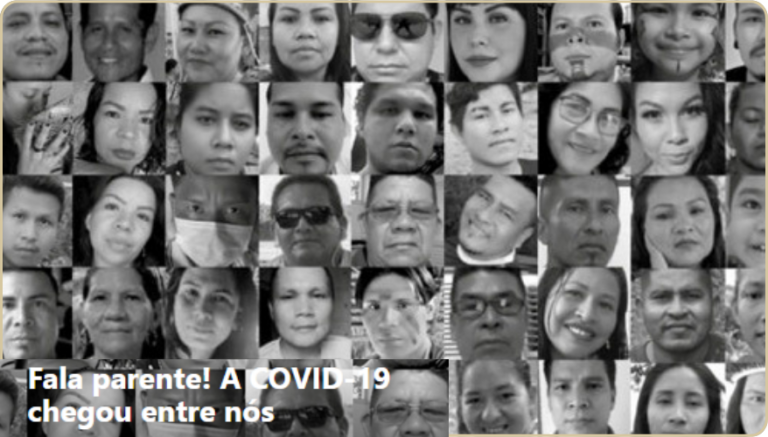
This commitment is reflected in the collections that make up the Digital Memorial. Among them, the Fala Parente project stands out, bringing together accounts produced by Indigenous peoples during the pandemic, highlighting their experiences, care strategies, and forms of resistance within their territories. For Luene dos Santos Karipuna, a member of UNIFAP’s Pet-Indigenous project, “participating in the accounts and reading the accounts of relatives meant being able to share concerns and fears with them, to help them vent in some way, because it is not easy to live in the position we find ourselves in today.”
Cleisy Narciso Silva’s experience, meanwhile, as she reflects on a question from her grandmother, highlights the insecurity that permeated different communities: “Will we have to flee again, as we did in the past, when measles broke out in our village?”.
First collections reflect the diversity of preserved memories
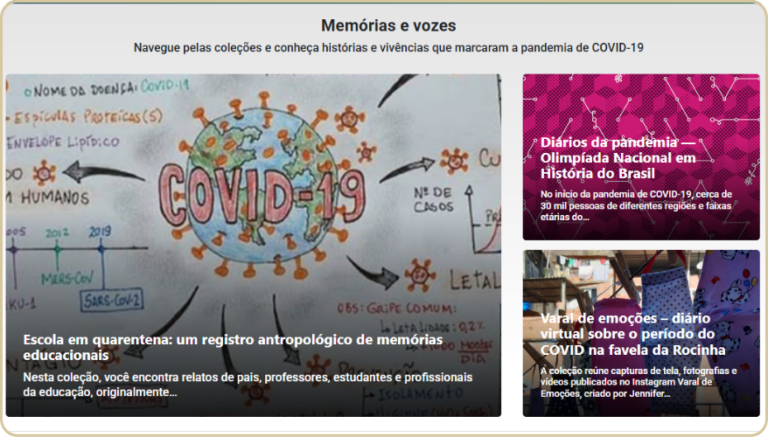
The first collections available on the Digital Memorial expand this diversity of experiences and regions. At the time of its launch, three collections are published in the digital repository: “School in Quarantine: An Anthropological Record of Educational Memories,” featuring accounts from parents, teachers, students, and education professionals; “Lives Matter, Photographs by Erbs Jr.,” consisting of black-and-white photographs taken by photojournalist and historian Carlos Erbs Jr.; and “Speak Up, Relatives! COVID-19 Has Arrived Among Us,” featuring one hundred written accounts by leaders, nurses, students, teachers, elders, and young people from the Apalai, Galibi Kalin’a, Galibi-Marworno, Karipuna, Palikur-Arukwayene, Tiriyó, Kaxuyana, and Waiãpi peoples.
The materials include official documents and records produced by the communities in multimedia formats, such as audio, video, and photographs. “Initially, the collection was based on the content gathered by the Coronarchive project, followed by direct contact with the groups responsible for the publications,” comments Ian Marino. After discussions and agreements, the project teams, responsible for the first deposits in the collection, collected the materials.
Infrastructure for Preservation and Access
To ensure long-term digital preservation, the Digital Memorial adopts the OAIS model (ISO 14721), an international standard that guides the organization and security of digital repositories. It uses two integrated solutions: Archivematica, which enables the ingestion and organization of files, and Tainacan, which allows public access to documents.
This structure enables the continued deposit of files by groups and individuals interested in donating collections. It also allows sensitive content to be stored with restricted access, while other content can be made publicly available, as agreed with the donors and in accordance with the project’s Preservation Plan.
Next steps: expanding the collection and involving new groups
Following the launch of the Digital Memorial, it is expected that new groups will make deposits independently, progressively expanding the historical collection.
To learn how to donate documents to the Digital Memorial, interested users can download the Collection Sharing Guide, which provides guidance on the procedures necessary to complete the donation, and contact the technical teams through the portal, on the webpage “Memorial > Share your collection”.
Learn more: COVID-19 Pandemic Digital Memorial, CCMS/MS, BIREME/PAHO/WHO, PAHO, Unicamp Center for Digital Humanities