LILACS! 40 years of visibility to scientific output in the Region
LILACS – Latin American and Caribbean Health Sciences Literature – completes 40 years of operation. Coordinated regionally by BIREME/PAHO/WHO with a cooperative network of more than 900 institutions in 30 countries that continuously select, index, and update the database, it is recognized for its importance, scope, and support for the visibility of scientific output in health published in Latin American and Caribbean (LAC) countries. Since its creation, LILACS has played an essential role in democratizing access to scientific and technical information and knowledge in health, with its network capable of keeping LILACS current, necessary, and relevant.
With over one million records, including articles, theses, books, reports, and proceedings, LILACS makes 70% of its content available in open access, with direct links to the full text. The collection covers 35 countries and six languages, predominantly Spanish, Portuguese, English, and French.
Its development was made possible by LILACS Methodology, a set of criteria, flows, description and indexing rules (using the controlled vocabulary DeCS), and tools that ensure information management and quality and the creation and management of bibliographic databases. Among these are FI-Admin, for information source administration; BIREME Accounts, for access management; and the scientific journal evaluation platform, which ensures curation, data standardization, database updating, and data reuse.
This infrastructure has enabled the creation of hundreds of databases with global, regional, national, and institutional coverage: AIM; BIGG; PIE; BRISA; BDENF; MOSAICO; MEDCARIB; BINACIS; ColecionaSUS; MINSAPERU; and SES-SP, among others.
LILACS is part of the Global Index Medicus (GIM), of the World Health Organization (WHO) and is essential for systematic reviews contextualized to the regional reality, in addition to complementing MEDLINE/PubMed, for the visibility of publications that are generally left out of international databases.
In 2024, as a strategy to give more visibility and prominence to the region’s scientific and technical output in the Virtual Health Library (VHL), the LILACS Plus collection was launched, which includes all the content of the LILACS database and Latin American and Caribbean output registered in MEDLINE, BDENF, BIGG and other databases that are part of the VHL Regional Portal collection. The collection already brings together more than 2.8 million documents from 140 countries, with more than 50% in open access, expanding the visibility of Latin American science on the global stage.
Recognition activities
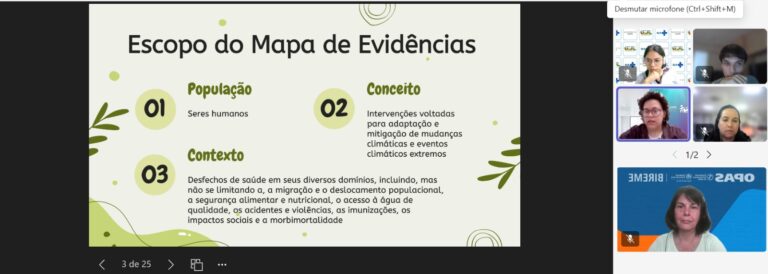
The recognition activities began on October 30, the date of LILACS’ 40th anniversary, during the webinar “LILACS 40 Years: Science with Identity and Innovation”, which was attended by more than 100 participants from the VHL and LILACS collaboration networks. During the webinar, the commemorative seal for the date was launched, the 40th anniversary logo, and the beta version of the new LILACS Portal, which marks a new stage in the platform’s modernization.
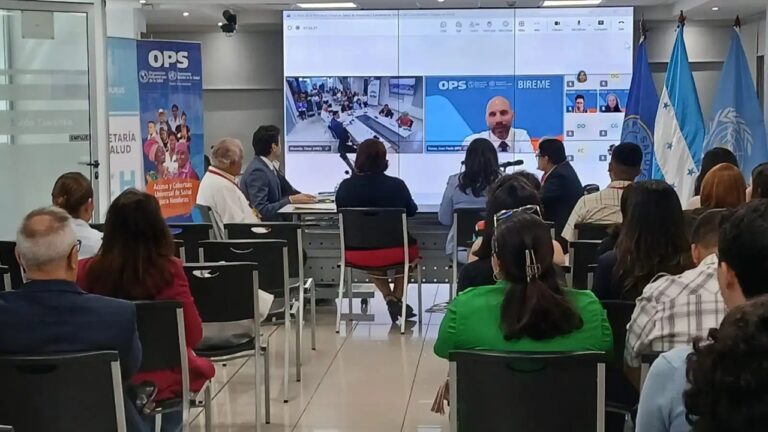
The opening featured a presentation by the director of BIREME/PAHO/WHO, João Paulo Souza, who emphasized the role of LILACS in consolidating regional inf ormation sovereignty and highlighted the platform update as a step forward in strengthening cooperative networks and innovating health information management.
The program also included a presentation of the LILACS Plus collection by Verônica Abdala, BIREME’s Information Products and Services (IPS) manager, highlighting the advances promoted by the new collection in the visibility of regional scientific output. Next, Sueli Mitiko Yano Suga, FIR/PSI Supervisor, presented the LILACS Panorama, including the characterization of the profile of indexed journals and a demonstration of database growth indicators, in addition to highlighting the Network’s participation and the impact of the ecosystem over four decades of cooperative operation.
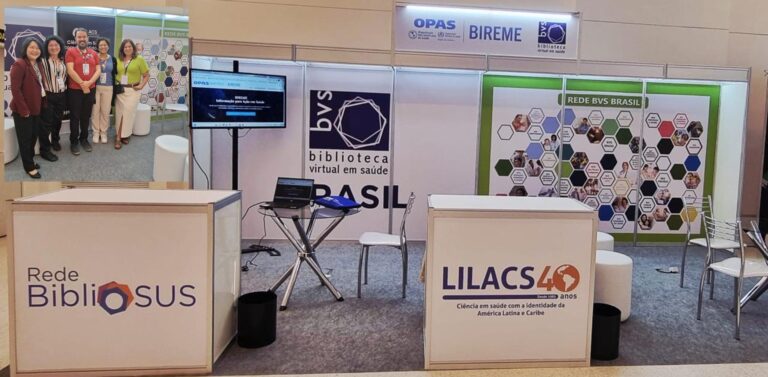
On November 3, prior to the ABEC Meeting 2025, which took place from November 4 to 7 at Universidade Federal da Paraíba (UFPB) in João Pessoa,  a special session was held entitled “LILACS, 40 years of commitment by BIREME/PAHO/WHO to the democratization of health science in Brazil.” On that occasion, the presenters revisited the trajectory of LILACS, highlighting its importance and impact on the dissemination of Health Science in the Region. Sueli Suga, FIR/PSI supervisor, led the activity, which was attended by more than 30 people.
Also in November, LILACS was featured in the opening ceremony and scientific program of the XXIII National Seminar on University Libraries (SNBU 2025),held in São Paulo from November 17 to 20.  On the first day of the event, a ceremony paid tribute to BIREME and LILACS, with the presentation of a commemorative plaque and a speech of recognition by the Brazilian Federation of Associations of Librarians, Information Scientists, and Institutions (FEBAB).
Other outreach activities for engagement were also conducted during SNBU 2025, with emphasis on the following oral communications that are published and available in the proceedings of the meeting:
- LILACS Plus: strategy to strengthen the visibility of scientific output in health in Latin America and the Caribbean(in Portuguese)
- Indicators for managing bibliographic databases and cooperation networks: the case of LILACS (in Portuguese)
LILACS is a collective asset of Health Science, strengthening regional research, contributing to the formulation of public policies, and supporting professionals, students, and managers in making evidence-based decisions. For 40 years, it has been a benchmark for the future of health information management in the region.
The DeCS team at BIREME has published a detailed text alluding to the date in Portuguese, Spanish, and English: LILACS 40 years
Invitation
We invite LILACS collaborators, editors, and users to share their testimonials and experiences, highlighting how LILACS has contributed to strengthening access to and dissemination of scientific knowledge in their contexts of activity:
Portuguese: https://bit.ly/LILACS40anos-depoimento
Spanish: https://bit.ly/LILACS40anos-testimonio