Integrative and Complementary Health Practices and Traditional Medicines in focus
BIREME participated in the 5th CONGREPICS – National Congress on Integrative and Complementary Health Practices, held May 6–9 at the Universidade Federal da Bahia (UFBA) in Salvador, Brazil, with contributions focused on strengthening the production, access, and application of scientific evidence in Traditional, Complementary, and Integrative Medicine (TCIM). Under the theme “National Policy on Integrative and Complementary Health Practices (PNPIC, in its Portuguese acronym): 20 years weaving policies and knowledge for the consolidation of Brazil’s Unified Health System – SUS”, the event brought together managers, researchers, health professionals, and representatives of social movements and national and international institutions to discuss the strengthening of Integrative and Complementary Health Practices (PICS, in its Portuguese acronym) in Brazil.
The opening ceremony was attended by Brazil’s Health Minister, Alexandre Padilha, during which the creation of the PICS Coordination Office within the Ministry of Health was announced, along with the recognition of ObservaPICS/Fiocruz as a Collaborating Center of the World Health Organization (WHO), in coordination with the Pan American Health Organization (PAHO). BIREME Director João Paulo Souza joined the opening panel alongside representatives from PAHO, the Ministry of Health, UFBA, Fiocruz, RedePICS Brasil, and other academic and scientific institutions, reinforcing the strategic importance of integrative and complementary practices within the context of Brazil’s Unified Health System (SUS).
The congress’s scientific program also highlighted BIREME’s technical cooperation in the field of TCIM, particularly through the WHO Traditional Medicine Global Library (TMGL), an initiative developed by BIREME in collaboration with WHO to expand qualified access to scientific and technical information on traditional medicines on a global scale.
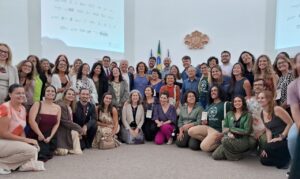
Workshop and Roundtable Discussion: WHO Global Library of Traditional Medicine
The workshop on the TMGL aimed to present the main components of the online platform and train participants in the use of search and information retrieval resources in TCIM. The activity covered the Library’s architecture, its informational components, and the integration of scientific databases, normative documents, public policies, evidence maps, literature reviews, and resources supported by generative artificial intelligence, such as TMGL GPT.
During the workshop, advanced search strategies in TMGL were demonstrated, including the use of Boolean operators, the building of search strategies, thematic filters, and navigation by integrative practices, traditional medical systems, and dimensions of traditional medicine. The activity also highlighted the platform’s methodological advantage in integrating regional diversity, metadata standardization, and specialized thematic organization, thereby strengthening access to quality information and the use of scientific evidence to support research, clinical practice, and health management.
The program also included a panel discussion on the WHO Traditional Medicine Global Library, in a session dedicated to technical and institutional exchange on international cooperation, knowledge management, and the strengthening of information networks in TCIM. The session highlighted the initiative’s trajectory, from the regional experience of the TCIM Americas VHL—which served as a reference for the project’s development—to the launch of the global platform at the 2nd WHO Global Summit on Traditional Medicine in 2025 in India.
The presentation addressed the cooperative governance principles of TMGL, its federated structure of information sources, the regional diversity of the collections, and the platform’s strategic role in connecting traditional knowledge, scientific evidence, public policies, and health innovation. The presentation also emphasized TMGL’s contribution to strengthening knowledge management in PICS/TCIM, promoting qualified access to information, visibility of regional scientific output, and support for evidence-based policy formulation.
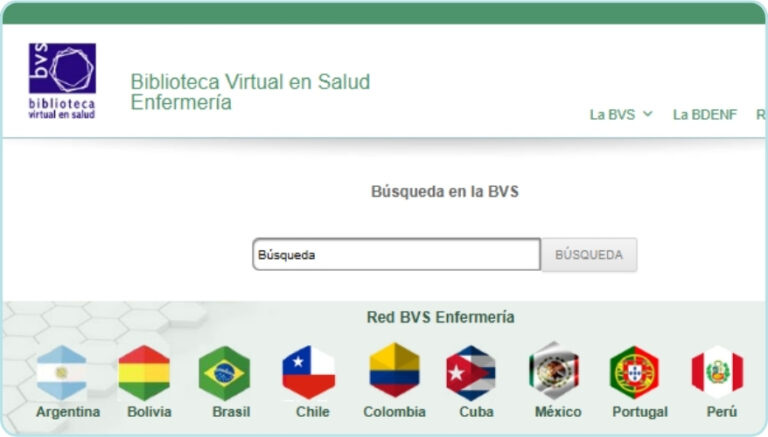
Also highlighted were the advances in BIREME’s cooperation with the TCIM Americas Network, the importance of LILACS and specialized databases in representing traditional knowledge, and the role of TMGL as an interoperable health information ecosystem.
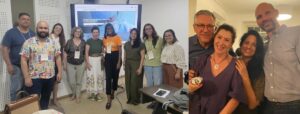
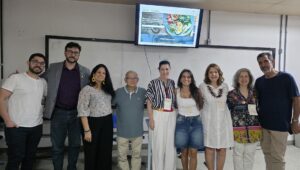
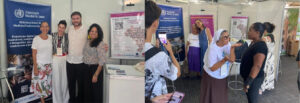
Institutional booth
During the event, BIREME hosted a series of activities at its institutional booth, promoting TMGL and strategic products such as the TCIM Americas VHL and DeCS – Health Sciences Descriptors, while fostering dialogue with researchers, administrators, professionals, and representatives of national and international organizations active in the field.
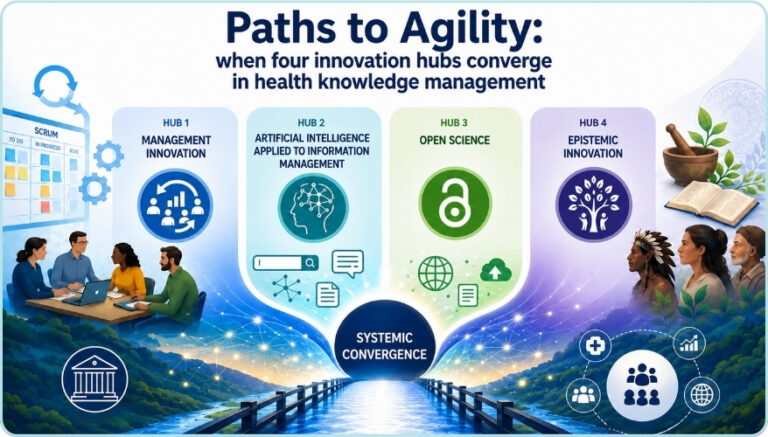
The activities carried out throughout the congress strengthened the technical cooperation agenda surrounding the TMGL, promoting the exchange of experiences, integration of content, and expansion of knowledge networks in TCIM/PICS. In this context, BIREME reiterated its commitment to developing open-access strategies for scientific information, valuing traditional knowledge, and promoting evidence to support public policies and comprehensive healthcare practices, expanding its coordination with strategic institutions committed to strengthening TCIM in the SUS, including the Ministry of Health, CABSIN, Fiocruz, universities, and national and regional collaborative networks, particularly RedePICS Brasil.
The event also consolidated BIREME’s role as a regional reference in information and knowledge management in TCIM, contributing to the strengthening of TMGL as a global WHO initiative within the context of the Global Strategy on Traditional Medicine 2025–2034.