BIREME and the Ministry of Health: health information and knowledge management
The 5th Amendment to the 93rd Technical Cooperation Agreement (TA5/TC93) with PAHO/WHO and the Ministry of Health of Brazil prioritizes the strengthening of the Latin American and Caribbean Center on Health Sciences Information (BIREME) in the context of health information and knowledge management, aligned with the goals of the 2030 Agenda for Sustainable Development and the principles of Universal Health Coverage, while maintaining information products and services available to countries in the Region. Promoting equitable access to information, strengthening the capacity of health systems—especially Brazil’s Unified Health System (SUS)—and using qualified evidence to inform public policies, healthcare practices, and service management remain central to its objectives.
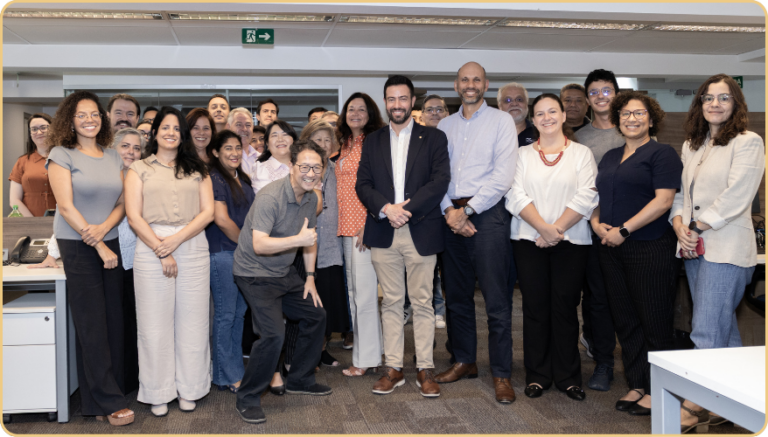
In the first quarter of 2026, shortly after its formalization in December 2025, BIREME and the Ministry of Health, in a hybrid meeting held on March 24, 2026, acknowledged the results already achieved under the four Expected Results of TA5/TC93, highlighting:
LILACS as a regional strategic infrastructure. The Latin American and Caribbean Health Sciences Literature (LILACS) has been consolidated as the main scientific health information infrastructure in Latin America and the Caribbean, Portugal, and Congo, with broad coverage (36 countries, 154 centers, and 53 databases) and a strong contribution from Brazil (70% of the production). The most relevant advancement in the period was the expansion of interoperability, with automated integration of thousands of articles and journals, as well as progress in editorial quality through systematic journal evaluation.
Increased visibility through the VHL. The Virtual Health Library (VHL) significantly expanded the visibility of scientific and technical production by integrating new information sources, such as the PrevCan database (Cancer Prevention and Control), and incorporating practice-oriented content, such as Experience Reports. This expansion reinforces the VHL as the main integrated access point to health knowledge in the Region.
Sustainability and technological innovation of the VHL. Structural improvements were implemented in VHL search services, including new display formats, advanced filters, and the incorporation of artificial intelligence through DeCSFinder AI. These initiatives strengthen operational efficiency and user experience, while preparing the infrastructure for more advanced solutions.
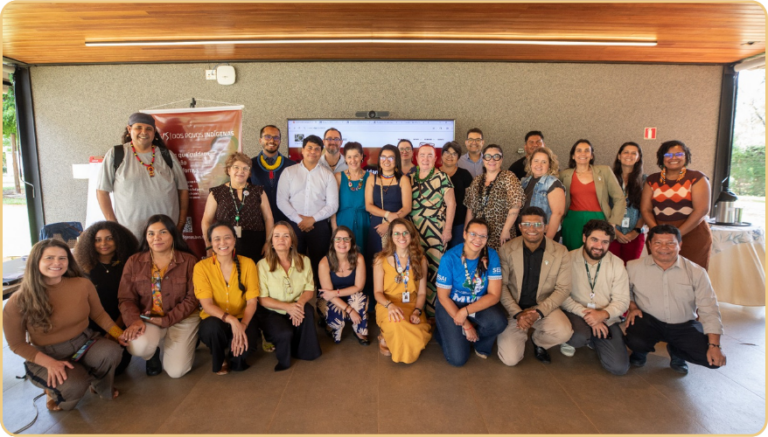
Strengthening systems and democratizing access. BIREME advanced in strengthening information systems and democratizing access to knowledge through capacity-building actions, strategic events, and the expansion of knowledge showcases. Highlights include broad participation in initiatives such as (1) the 40th anniversary of DeCS and (2) Networks in action with BIREME’s strategic milestones in March 2026, as well as the increase in the number and relevance of thematic showcases, with 67 showcases published on the portal.

About the meeting. This meeting preceded the semiannual meeting for sharing results held between BIREME/PAHO/WHO and the national counterparts of the Ministry of Health, particularly with technical focal points from the Department of Technical Cooperation, Innovation and Health Development, and the General Coordination of Documentation and Information, both under the Executive Secretariat. This activity characterizes project management and the development of products and services at BIREME, which must be aligned with the needs of national counterparts by recognizing value delivery and new priorities within agreed projects.
Promoting the exchange of experiences and best practices in health information and knowledge management, both nationally and internationally, with an emphasis on South-South cooperation, is an approach to strengthening capacities through coordination among institutions that produce and use knowledge, fostering regional synergies and strengthening Brazil’s leadership in the production and dissemination of health evidence.