Delivering Value Through Agile Culture
 During the first week of work of 2026, the technical, project, administrative, and specialized consultants’ teams met to recognize and celebrate the results achieved at the end of the 2024-2025 biennium, with the development of BIREME/PAHO/WHO information products and services, and also to reinforce the application of lessons learned for the 2026-2027 biennium.
The Agile Culture registers an important breakthrough in its implementation especially by being in tune with the BIREME Project Management Office (PMO) which enables the achievement of results with the delivery of value recognized especially by external counterparties and institutional supporters.
The strengthening of Organizational Learning was observed, through the implementation of agile culture, by the competencies developed at the individual and collective levels when attending to strategic priorities pre-defined by the director and leaders and coordinated by the Center product owners (POs). In addition, communication actions on developments and advances contributed to the engagement of the team members enabling synergy of efforts and transparency of processes, one of the pillars of agile culture.
The information products and services in the context of five Terms of Cooperation (TC) in coordination with PAHO Brazil and one Grant with the World Health Organization (WHO) record significant results for BIREME’s technical cooperation at national, regional and global levels: 91 (SECTICS), 93 (SE; SAPS and SESAI – for BIREME), 95 (SE and SEIDIGI), 140 (SECTICS); 157 (SEIDIGI) and the Award for the development of the Global Library of Traditional Medicine with the Global Traditional Medicine Centre (GTMC) of the WHO. The recognition actions of LILACS were also highlighted as a product of information that completed 40 years of operation for the visibility of scientific production in the Region.
Outstanding results

WHO. The Traditional Medicine Global Library was launched in December 2025, in cooperation with the WHO Global Centre for Traditional Medicine, at the II WHO Global Summit on Traditional Medicine. The library features six regional portals, 194 country pages, and two thematic pages: Ayurveda and Traditional Birth Attendance. It brings together collections of scientific and technical documents (more than 1.7 million), multimedia, journals, evidence maps, bibliographic repositories and databases, policies and regulations, in addition to the collection from the I WHO Global Summit on Traditional Medicine. Innovations based on artificial intelligence, such as a specific thematic GPT model, are also being implemented.
TA2/TC91 (SECTICS). Strengthening Evidence-Informed Policy through the publication of two Evidence Maps — Strategies for Promoting Childhood Vaccination and Impacts of Climate Change on Human Health, and the delivery of 70 Second Informative Opinions (SOInf), rapid summaries of scientific evidence to respond to specific demands on health technologies, interventions and policies, the advancement in the modernization of the EVIPNet Brazil Portal and the continuous maintenance of technical support to the EVIPNet Brazil Network.
TA2/TC140 (SECTICS). New Windows of Knowledge on the topic Labor market for medical professionals that brings together and organizes relevant content on the topic, allowing qualified access to selected evidence, data and publications, and was developed in conjunction with the Department of Health Economics and Development of the Ministry of Health. Permanent activities of support, hosting and processing of information sources of the BVS ECOS.
TA13/TC95 (SE). Significant advances in technological innovation and institutional strengthening. Highlights include the evolution of semi-automatic indexing, with the availability of suggested descriptors in FI-Admin, the visualization of automatically assigned descriptors in iAHx, and the beginning of the design of natural language search, with the definition of a vector model for literature retrieval. The implementation of the Super Summaries service across the entire Mosaico database (Integrative Health) progressed, with continuous generation by a specialized language model and automation for inclusion in the LILACS database, which exceeds 100,000 records. Strengthening the BVS Brasil Network included the launch of the new interface for the Ministry of Health’s BVS, the holding of 11 online meetings, participation in SNBU 2025, and the guarantee of technical, methodological, and infrastructure support for the databases. In the COVID-19 Digital Memorial, progress was made in conceptual and technical consolidation, the definition of management and preservation policies, institutional validation, the implementation of the Archivematica and Tainacan platforms in a test environment, and the development of the portal prototype.
TC95/TA8 (SEIDIGI). Progress in strategic articulation and modernization actions, highlighting BIREME’s participation in the Organizing Committee of the 30th anniversary commemorative event of RIPSA, through planning meetings, and support for the editorial development of the 3rd edition of the Green Book. In digital deliverables, the IDB Qualification Sheet Portal was made available in production, expanding public access to qualified information on health indicators. In addition, the redesign process of the RIPSA Portal was presented at the 32nd OTI, in August 2025.
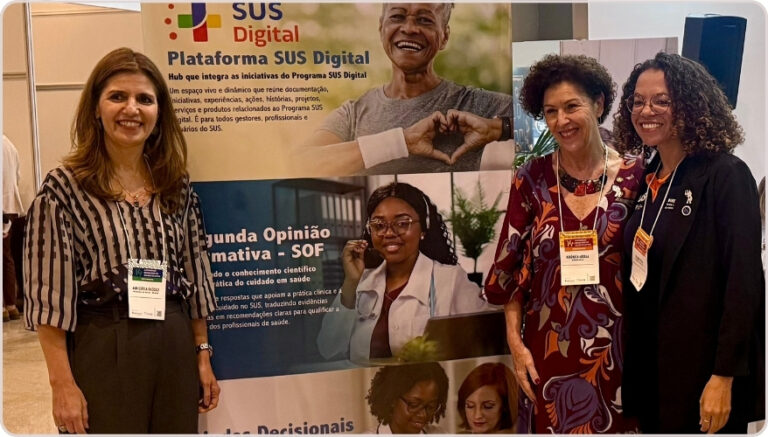
TC157/TA1 (SEIDIGI). The Second Formative Opinion (SOF) renewal project has progressed in consolidating the production and management ecosystem. The SOF Portal has been finalized in a test environment, and SOFNet is in the final adjustment phase for production. In the collection update, 506 SOFs were reviewed, 449 updated, 36 new ones created, and 30 GRADE recommendations converted into SOFs. The Decision Aids project has progressed in methodological consolidation and preparation for implementation, including a structuring workshop and alpha testing in Family Clinics in Rio de Janeiro, with 22 professionals and 31 patients. The SUS Digital Platform was pre-launched at the 14th Brazilian Congress of Collective Health, from ABRASCO, as an integrating hub for content and initiatives of the SUS Digital Program.
TC93/TA4 (SESAI). Progress has been made in consolidating the Indigenous Peoples’ Virtual Health Library (VHL), with the Portal in its final adjustment phase, the Timeline of the History of Indigenous Health completed, the Windows of Knowledge “Indigenous Medicines in Brazil” and “Emergency in the Yanomami Indigenous Territory” revised and validated, and the SasiSUS Memory database structured from the curation, processing, and thematic organization of nearly 800 records.
Contribution: Silvia de Valentin (AM BIR)